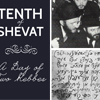
Seventy years ago this week, on the 10th of Shevat, 1950, the previous Lubavitcher Rebbe, Rabbi Yosef Yitzchak Schneersohn, passed away. On the same date exactly a year later, our Rebbe officially accepted upon himself the leadership of the Chabad movement.
At a farbrengen marking the first yahrtzeit of his predecessor, the Rebbe stated in no uncertain terms that while he is now prepared to begin leading Chabad in an official capacity, he will continue to insist that his followers partner with him in this endeavor.
The Rebbe inspired generations of young men and women to move away from the comforts of their communities and set up shop in distant and smaller places for the benefit of the Jews living there. Today, the Rebbe’s shluchim, the emissaries all over the world, continue being an extension of the Rebbe’s arm, inspiring and uplifting hundreds of thousands of Jews.
Seventy years ago the Rebbe envisioned reaching every single Jew wherever he or she may be; today that vision is a very real and still growing reality!
Wait a second what about you? Aha! I challenge you to read, watch, study or listen to the Rebbe words wherever you might find them, see for yourself he is talking to you just as to me.
The Rebbe empowers every single one of us to do our part.
By divine providence you are reading this and by divine providence you are you.. Wherever you are! At this time! At this place! At this point in your life! To do what only we can at this moment!
Your Questions Why Is 70 Special? It appears several times in the Torah: seventy elders of the Jewish nation, seventy languages and nations of the world, and seventy members of Jacob's family.
10 Shevat 10 Shevat This day, so relevant to every Jew in our generation, is surely a day for reflection, learning, prayer, positive resolutions and acts of loving-kindness.
Soon after allowing the children of Israel to depart from Egypt, Pharaoh chases after them to force their return, and the Israelites find themselves trapped between Pharaoh’s armies and the sea. G‑d tells Moses to raise his staff over the water; the sea splits to allow the Israelites to pass through, and then closes over the pursuing Egyptians. Moses and the children of Israel sing a song of praise and gratitude to G‑d.
In the desert the people suffer thirst and hunger, and repeatedly complain to Moses and Aaron. G‑d miraculously sweetens the bitter waters of Marah, and later has Moses bring forth water from a rock by striking it with his staff. He causes manna to rain down from the heavens before dawn each morning, and quails to appear in the Israelite camp each evening.
The children of Israel are instructed to gather a double portion of manna on Friday, as none will descend on Shabbat, the divinely decreed day of rest. Some disobey and go to gather manna on the seventh day, but find nothing. Aaron preserves a small quantity of manna in a jar, as a testimony for future generations.
In Rephidim, the people are attacked by the Amalekites, who are defeated by Moses’ prayers and an army raised by Joshua.
Today's Quote
No matter how hard a person works, no matter how much time or ingenuity he invests in his career or business, he will not earn a single cent more than what has been ordained for him from Above. Everything we do is merely the fashioning of the channel through which the divine blessing would flow and the vessels in which to receive them
Back in cowboy times, a westbound wagon train was lost and low on food. No other humans had been seen for days, and then the pioneers saw an old Jew sitting beneath a tree.
“Is there some place ahead where we can get food?” they asked.
“Vell, I tink so,” the old man said, “but I wouldn’t go up dat hill und down de udder side. Somevun tole me you’d run into a big bacon tree.”
“A bacon tree?” asked the wagon-train leader.
“Yah, an bacon tree. Vud I lie? Trust me. I vudn’t go dere.”
The leader goes back and tells his people what the Jew said.
“So why did he say not to go there?,” a person asked.
“Oh, you know those Jewish people; they don’t eat bacon.”
So the wagon train goes up the hill and down the other side. Suddenly, Indians attack them from everywhere and massacre all except the leader, who manages to escape and get back to the old Jew.
Near dead, the man shouts, “You fool! You sent us to our deaths! We followed your route, but there was no bacon tree, just hundreds of Indians who killed everyone but me.”
The old Jewish man holds up his hand and says, “Oy, vait a minute.”
He quickly picks up an English-Yiddish dictionary and begins thumbing through it.
“Oy Gevalt, I made myself such ah big mistake!
It vuzn’t a bacon tree; it vuz a ham bush!”,
This email is sent from The European Synagogue Ohel Eliezer. We'd love to stay in touch with you, but if you wish to be unsubscribed from this list please click here, or click here to manage your subscriptions.